


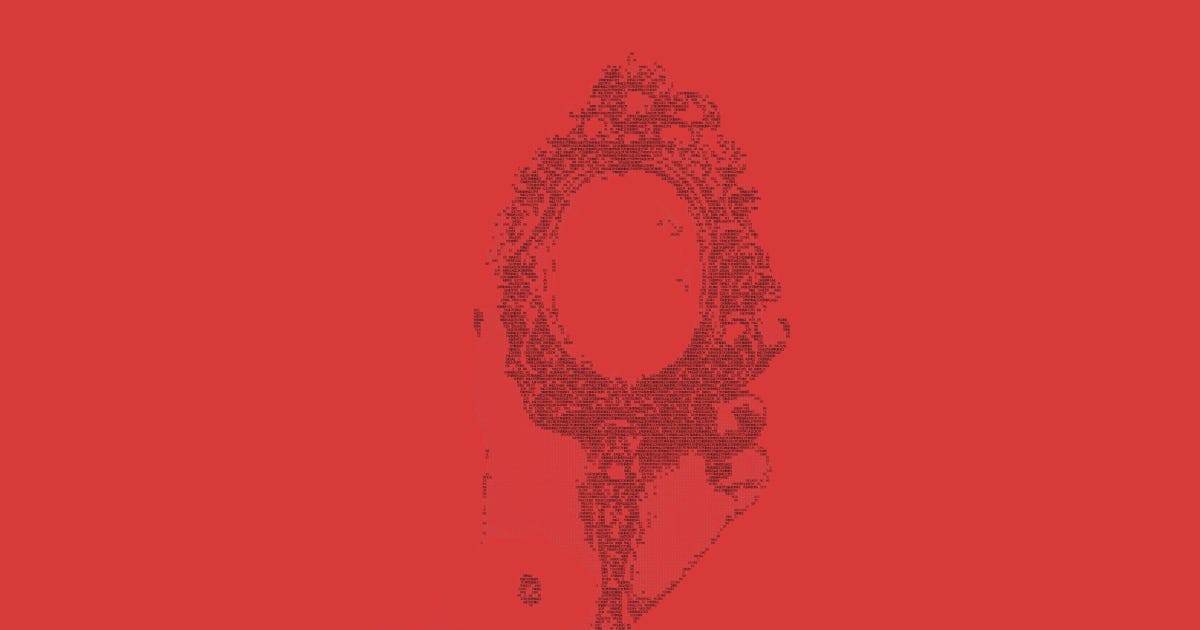
Object 1. A polished black handmirror, obsidian. Aztec origin. Purported to have been owned by Doctor John Dee, mathematician, etc. 14th-16th century (?)
Doctor John Dee’s sprawling estate in Mortlake contained fantastic gardens, guest rooms, a dining hall, and an enormous library.
There was also a secret room, known only to a few, in which Dee, and his medium Edward Kelley, held a private parley with angels.
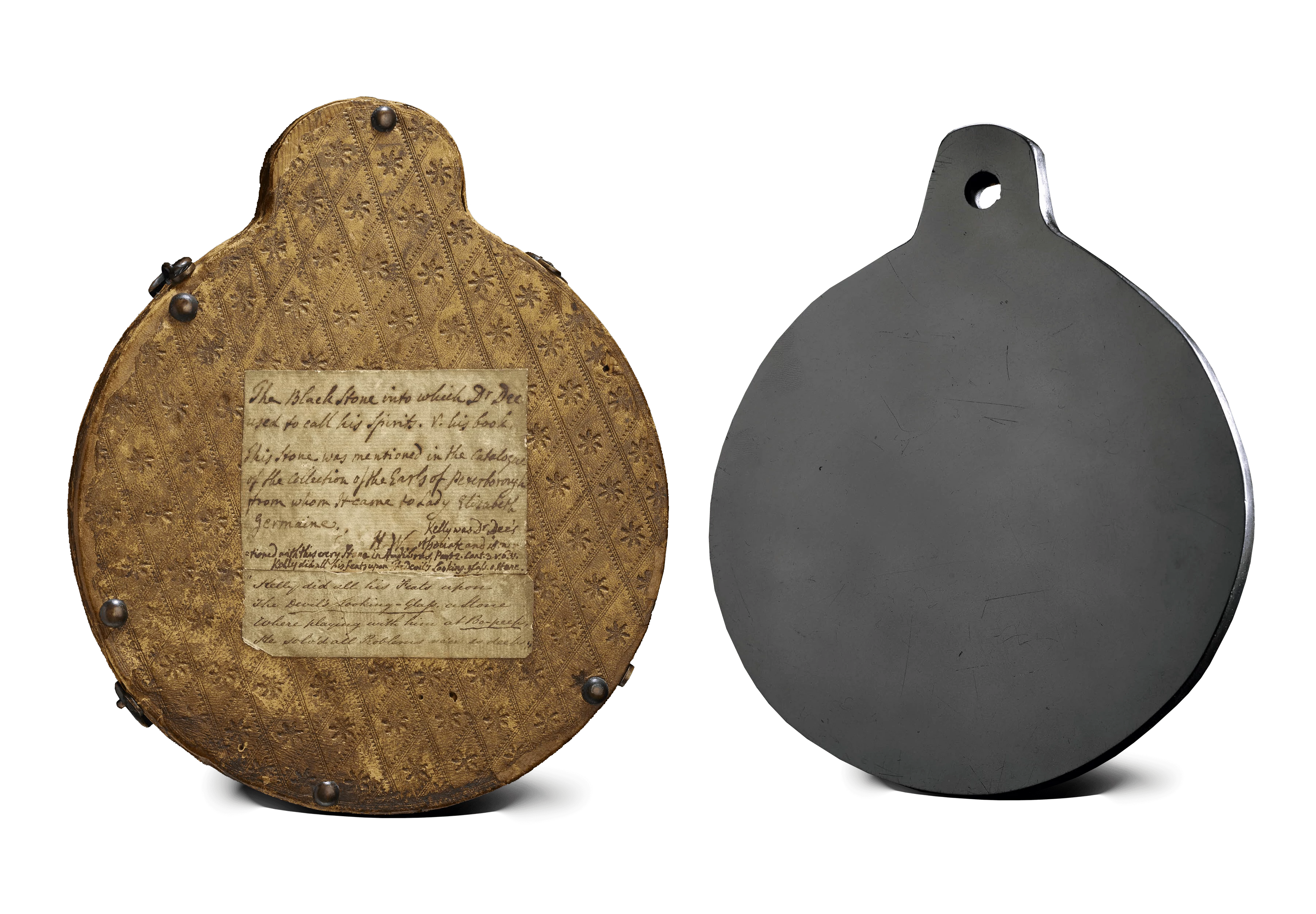
Kelley, seated at a ‘holy’ table with a sacred red-wax seal, would peer into a variety of scrying glasses and spheres - and, reportedly, a polished obsidian hand mirror. Dee, a famed scholar who had advanced the use of mathematics in navigation, cartography, and engineering, would sit dutifully by the medium’s side, feverishly recording the mystical missives relayed by Kelley. Dee was convinced he was receiving details of heavenly landscapes and universal secrets.
For Dee, it was something like an addiction, and like most addictions, this secret mystic sessions would eventually ruin him.
Doctor John Dee, in possession of an analytically gifted mind, had consulted to royalty and influenced an empire. Dee had also assembled the largest private library in all of England, and had devised wondrous mechanical creations for entertainment and exploration - including a robotic scarab beetle for a theatre production that was so convincing, the audience assumed it was sorcery.
Yet, Dee’s legacy will be mostly remembered for his invention of the angelic ‘Enochian’ alphabet and its magic properties and for his agreement, upon so-called divine instruction handed down by his psychic friend, to swap wives with Kelley.

It might be simple to criticise and condemn Dee as a madman, with his head full of angel language and magic. But I think it’s also, now, pretty easy to sympathise with him. His story certainly seems familiar.
Replace ‘angelic language’ with some concept of consciousness, physics, breakthrough business idea, or re-tooling entire industries overnight, and ‘scrying glass’ with AI chatbot and suddenly this sounds like a story you’d find told in a flurry of hyped up posts on LinkedIn.
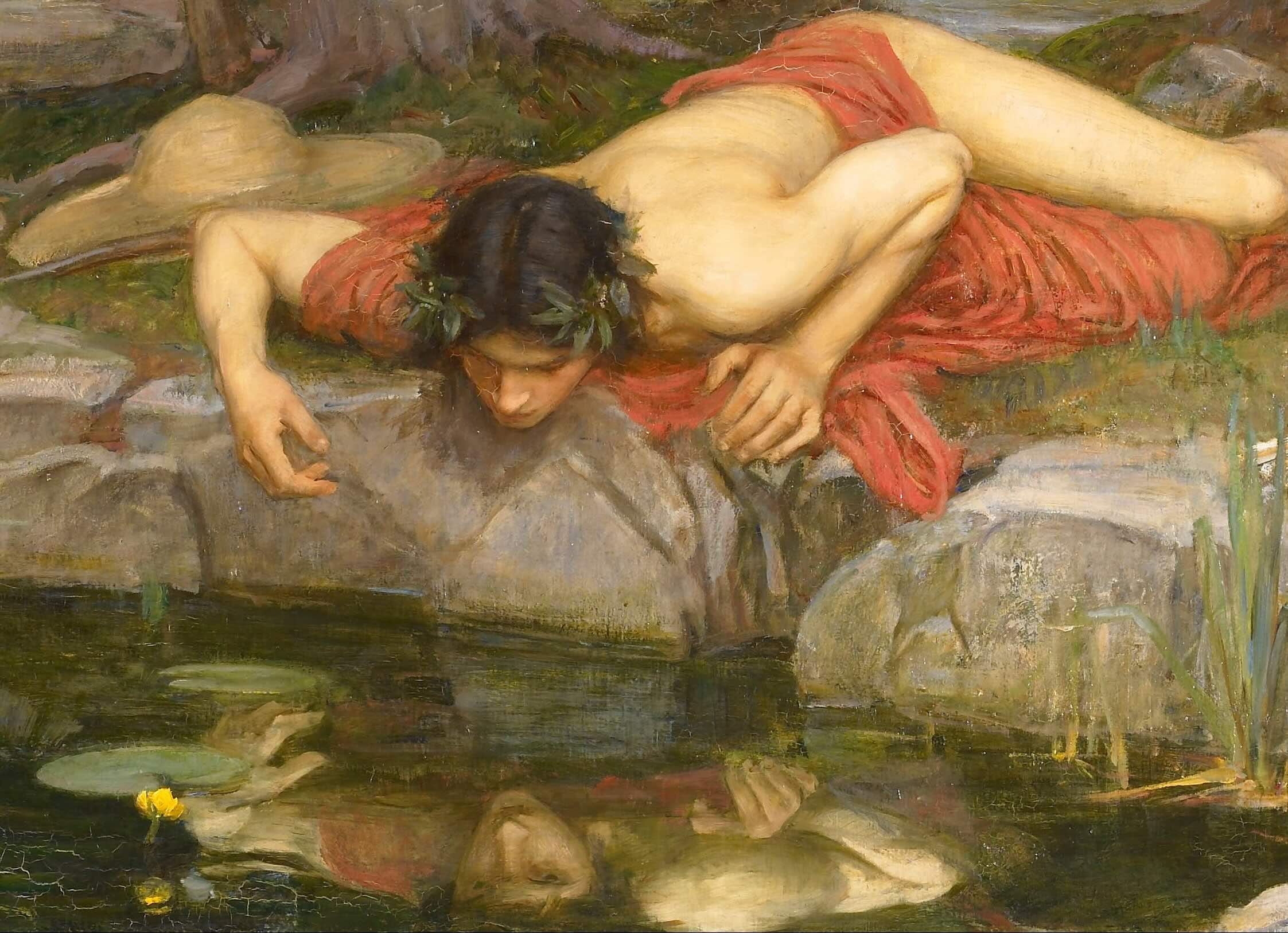
For pretty much as long as they have existed, mirrors and reflections have appeared in myth and fable around the world. From Narcissus, the Greek demi-god so gorgeous he drowned in his own watery reflection, to the magic mirror in Snow White that drove the Evil Queen’s obsession, to the lonely Lady of Shallot in her high tower watching Camelot through her mirror, and of course, Alice Through the Looking Glass.
Be careful, we are told. Mirrors are things you might get lost in.
What happens if everyone has a magic mirror, all the time? We’ve been in that world for some time now, and in a world consumed by mirrors, it’s no wonder we’re all feeling pretty lonely.
Object 2. Dish of pond water. Procured in Thespiae, Greece. Slightly oily surface, highly reflective. Traces of human remains. Difficult to look away from.
Since the 1990s, the number of adults in the United States that report having no close friends has quadrupled1. Meanwhile countries like Brazil, Turkey, and India report about half of the population feeling lonely ‘often, always, or some of the time’2. In Australia, one in three people report regularly feeling lonely3.
Had large language models emerged in the 1990s they might not have landed with such a meteoric social explosion. Instead generative AI arrived on Earth in a time when we are epidemically lonely. When bars and community halls are drying out and dying, and knowing thy neighbour is a sweet old fashioned idea from times long gone.
They also turned up, either by design or profitable accident, in a form that best replicates the feeling of the intimate depths-of-my-soul conversations that have largely abandoned, if not still longed for.
For many, an AI chatbot is just a tool to crunch data or generate silly videos. But for many, and I think, many people of influence and power, it’s a respite from isolation. AI is someone to talk to about your craziest ideas, most shameful questions, or deepest dreams. In a world that has lost a lot of human contact, and for people whose reputation and job generally excludes them from seeming unsure, or grants them the grace of a wild idea, this is an understandably tempting pool to look into.
It is easy to understand why so many CEOs, executives, and startup founders have turned to AI to validate their ideas, or own identity.
A lambert scrying glass in a dark room to which you can speak wishes, and hear it whisper back: You are the fairest of them all.
Because it will whisper back.
In 2026, spinning up a romantic partner is simple as creating an account with any number of platform providers - some that already supports twenty-million users4. This romance-on-demand is understandable in a messy, frightening world that is full of unjust and unfair events and increasingly unsociable people.
All of this provides a neat solution in not having to look up from the mirror at how difficult the world is. And that, like Narcissus and his pond, spells our doom. Because the CEO alone in his study, detailing his business plan to a chat bot, and the yearning lover reading poetry to their digital companion have the same loss: conflict. There is no one to tell that executive that their idea is, actually, pretty bad. And no one to tell them how to improve it. Just as there is no one to challenge the lover with the different wants and hopes, ideas and plans that make a relationship difficult but worthwhile.
Object 3. Aluminium unibody. Scratch-resistant glass. Always-on display. AI ready. Purchased from Amazon.
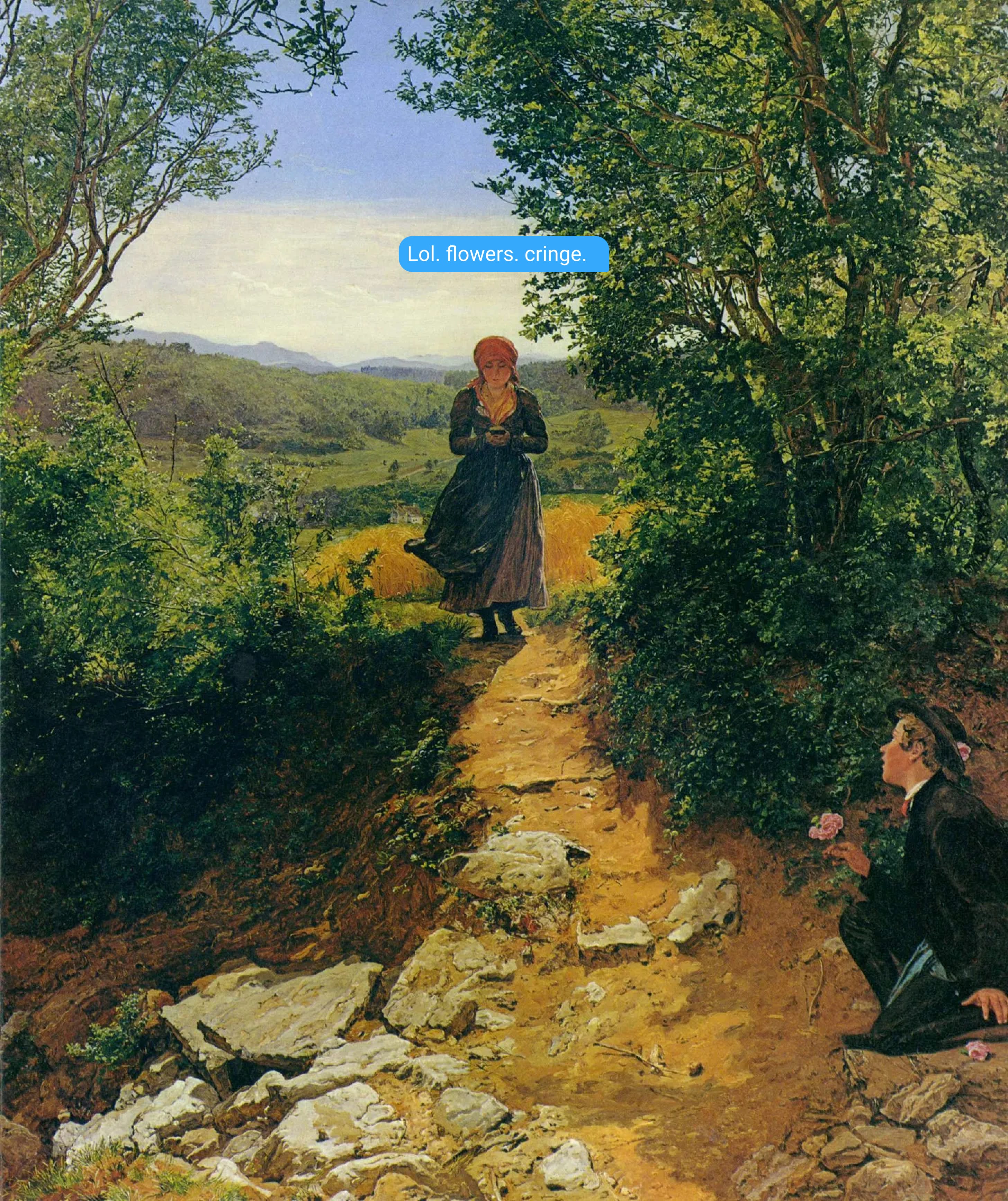
In June 2026, a leaked Microsoft document outlined the company’s strategy to ‘make people addicted’ to Copilot5, their AI ‘companion’ that nobody seems to really like anyway. ‘Addicted’ is, in many ways, the same language used by marketers all over the world in all verticals. Someone once tried to get the world addicted to Vitamin Water. But when the product in question is a naturally adaptable, language-based tool that feels intimate and personal - the one thing in all the world that really gets you - addictive is pretty doable.
Meta is a company that exists because of attention.
A company that feeds on the eyeballs of billions like a ravenous Chthonic god.
It’s also a company that invested more than eighty-billion dollars in an attempt to create a mirror world to reality6: a virtual plane of poorly rendered meeting rooms and legless avatars. A place in which their ability to monetise attention and connection could go forth undisturbed by the human need for real-world social interaction.
And when that wish for an alternate reality failed, they began investing hundreds of billions in artificial intelligence. This is not with the goal of uncovering new cures for disease or solving historic mathematical problems. It is to engineer an endless hall of magic mirrors, a social network full of imaginary friends and lovers that you never need to unfollow because the content is tailor made to you.
Friends who might ever encourage you to look up.
Who might never tell you your ideas need work.
Who might never pull you away from a dark room and con-artist mediums.
And who will never be able to look you in the eye, and fall in love.
Such is the risk of filling your life with magic mirrors - especially those that promise to adorn you with whispered secrets of the universe.
https://kpmg.com/kpmg-us/content/dam/kpmg/pdf/american-perspectives-survey-kpmg-2025.pdf
https://www.statista.com/statistics/1222815/loneliness-among-adults-by-country/
https://www.abc.net.au/news/2023-08-07/ending-loneliness-together-finds-33-per-cent-australians-lonely/102678790
https://arxiv.org/abs/2603.21106
https://www.404media.co/microsoft-wants-to-make-people-addicted-to-scout-its-new-ai-assistant-internal-documents-reveal/
https://finance.yahoo.com/sectors/technology/articles/mark-zuckerbergs-80-billion-metaverse-000000105.html?guccounter=1&guce_referrer=aHR0cHM6Ly93d3cuZ29vZ2xlLmNvbS8&guce_referrer_sig=AQAAAGCy5RwWoWn4RSzzXlh5t23UwoF4JdimbklkNz1jzqrjDydj6ZLMBFWwOTKy2Xu30jNnSTnGqGk5Gv4OnJ1zKwNuPRW-r43FzO3uwtg0EazcwOJwAczfqPIAEjYtE1W5VRVE-7hw3IlJdH9NXEH2hXqeJTHyy81CQ0CQ_ncEgfKV
I adore this piece of writing 🥹 I love the way you've infused art and story into your social commentary on meta and AI. It made me want to know my neighbour and go to my local bar with a friend 🧡
Wow I love the invocation of John Dee. Excellent analogy.
The magic system I created for my ttrpg is heavily based on shewstones.